


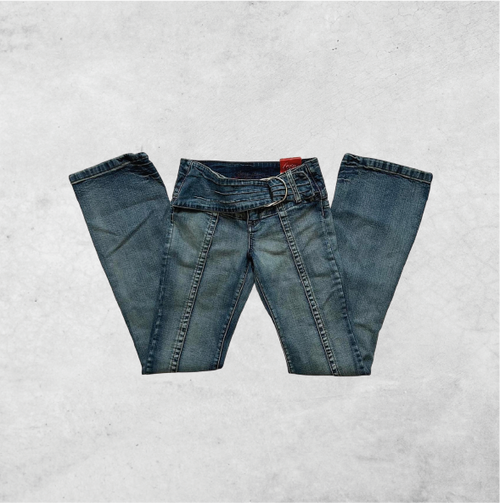
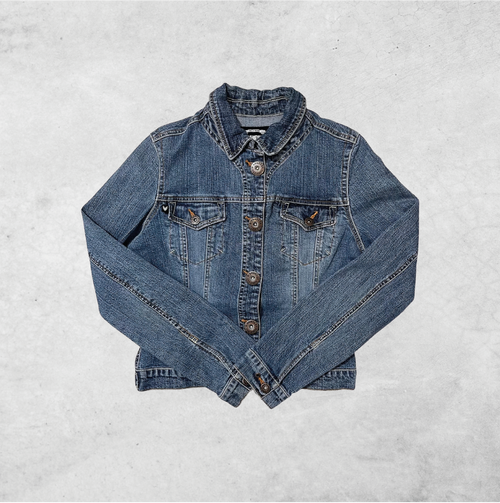
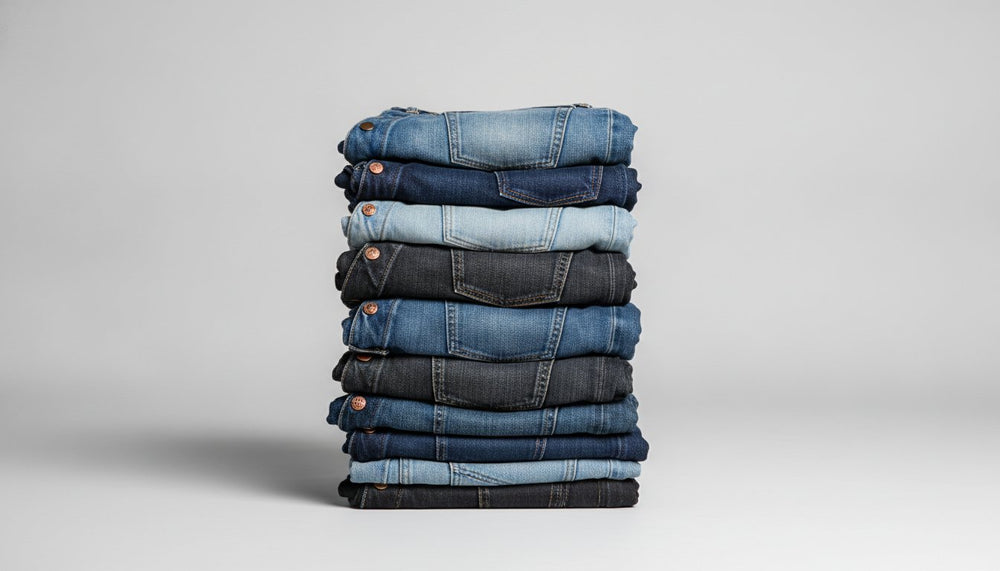
With the global secondhand apparel market projected to reach $485.97 billion by 2031, the shift toward circular fashion has moved from a niche hobby to a full-scale rebellion against the disposable waste of industry giants. Yet, for most people, the attempt to buy second hand jeans online still feels like an exhausting gamble. You spend hours scrolling through grainy photos and vague descriptions, only to receive a package that smells like a basement and fits like a straightjacket. It's the classic bait-and-switch of the digital thrift world, where the "perfect" vintage find ends up being another piece of landfill-bound clutter.
It's frustrating to invest your time and money into a more ethical wardrobe only to be met with inconsistent sizing and "thrift-grind" burnout. This guide is your roadmap to skipping the junk and securing high-quality, hand-picked vintage denim that actually fits your body and your life. We will show you how to decode vintage measurements, identify genuine quality markers, and build a curated collection that outlasts any fast fashion trend. You can save money and contribute to a circular economy without sacrificing an ounce of style; it is time to find denim that doesn't suck.
Key Takeaways
- Identify the specific hardware and denim weight markers that separate high-quality vintage pieces from disposable fast fashion crud.
- Master the flat-lay measurement method to bypass the "vanity sizing" lie and secure a perfect fit without needing a fitting room.
- Learn why choosing a curated shop is the smartest way to buy second hand jeans online and escape the exhausting cycle of scrolling through unvetted marketplaces.
- Understand the vital differences between corporate resale machines and hand-picked boutiques to ensure your denim arrives clean and ready to wear.
- Discover how a strategic, circular approach to your wardrobe saves money while building a collection of unique pieces that outlast modern industry standards.
why buying second hand jeans online feels like a gamble (and how to win)
Most modern denim is built to die. It is a cycle of planned obsolescence designed by fast fashion giants who prioritize turnover over texture. You buy a pair, they look okay for three weeks, and then the spandex gives out or the thin fabric tears at the thigh. This is the fast fashion crud cycle. When you look at the history of jeans, you see that denim was originally a rugged workwear staple, meant to withstand years of hard labor; today, it is often little more than blue-tinted plastic. We have traded longevity for a low price tag, and our closets are paying the price.
Trying to buy second hand jeans online often feels like a second job. It's the thrift-grind. You spend your Tuesday nights scrolling through 4,000 unvetted listings on corporate marketplaces, squinting at blurry photos and hoping the seller isn't lying about that "small" stain. It's a waste of your life. 2026 is the year we stop settling for the leftovers of a broken system. Curation is the strategy that changes the game. A curated shop isn't a digital landfill. It is a deliberate selection of pieces chosen for their soul, their structure, and their ability to actually last another decade.
the hidden cost of the "cheap" thrift
Cheap isn't always a bargain. When you buy uncleaned, unvetted jeans from a mass marketplace, you often pay a hidden tax. There is the delivery disappointment when the package arrives looking nothing like the photo, and the emotional toll of knowing you've just bought someone else's discarded trash. If a pair is suspiciously cheap, it was likely discarded for a reason. By the time you pay for deep cleaning or realize the "vintage" fit is actually a modern knock-off, that bargain has become a burden. High-quality curation eliminates the gamble by doing the hard work of vetting before you ever hit "add to cart."
breaking the fast fashion addiction
decoding the denim: what makes vintage jeans actually high quality
True quality isn't about a logo. It's about the literal weight of the fabric in your hands. When you buy second hand jeans online, you're often looking for that specific, heavy-duty feel that modern mall brands have abandoned in favor of cheap, stretchy blends. Real vintage denim usually weighs between 12 and 14 ounces per square yard. It feels substantial. It feels like armor. This weight is what allows the fabric to develop those beautiful, natural fades that laser-distressing simply cannot replicate. High-quality denim doesn't just look better; it survives the friction of daily life without thinning out after a few months.
The Y2K resurgence has brought back specific cuts that require this structural integrity. Think about the iconic baggy silhouettes of the late 90s or the wide-leg styles from brands like JNCO and Southpole. These aren't meant to cling; they're meant to drape. Finding authentic early-2000s washes means looking for that slightly grittier, multi-tonal blue that comes from traditional dyeing processes. It is a world away from the flat, uniform colors of today's mass-produced junk. If you want a pair that holds its shape while you move, you have to look past the surface-level trends and focus on the architecture of the garment.
the 100% cotton rule
If you want your denim to last another twenty years, you need to check the tag for 100% cotton. Modern "comfort stretch" is actually a blend of cotton and polyester or elastane. Over time, those plastic fibers snap. Your jeans lose their shape. They sag at the knees and lose their soul. Pure cotton denim is different. It doesn't stretch out; it breaks in. It might feel stiff on day one, but it eventually molds to your unique proportions like a second skin. This durability is the cornerstone of a sustainable future for your wardrobe. Choosing natural fibers means you're investing in a garment that can be repaired and worn for a lifetime.
hardware and hems: the quality markers
Quality is hidden in the details. Look for heavy metal zippers and reinforced copper rivets at the stress points. If you see plastic zippers or flimsy, painted-on hardware, you're likely looking at a fast fashion piece masquerading as vintage. Authentic vintage often features a chain-stitched hem, which creates a slight roping effect as the jeans age. This is a sign of manual care and superior machinery. We believe in these details, which is why our collection focuses on vintage jeans that have already survived the decades. When you buy second hand jeans online from a curated source, you're paying for the expertise that separates a "forever" pair from a temporary fix. Don't settle for factory-made holes. Real distress is earned by years of wear, not a factory laser.
the showdown: curated vintage shops vs. the corporate resale machines
The battle lines are drawn between faceless corporate algorithms and small, purpose-driven curators. When you set out to buy second hand jeans online, you are immediately funneled toward the Goliaths. These massive resale machines operate on sheer volume. They don't care about the story behind a pair of 1998 baggy jeans. They just want them out of the warehouse. It is a soulless experience that treats clothing as a commodity rather than a piece of history. You are just a data point in their quarterly growth report.
Then there is the peer-to-peer wild west. Marketplaces like Depop or eBay offer variety but zero quality control. You are left guessing if that "great condition" tag means the jeans are actually wearable or if they are covered in mystery stains. Curation is the rebellion. It is the decision to prioritize a human eye over a computer program. A curated boutique selects each item with intention. We ensure every pair meets a standard of excellence that mass platforms simply cannot touch. It's the "David" approach to retail: selective, transparent, and deeply committed to the mission of circular fashion.
why brand variety matters
Finding your identity in denim means looking beyond the few brands that dominate the corporate re-release market. Real Y2K style was built on a foundation of diverse, non-conforming labels that prioritized unique fits and experimental washes. While a corporate site might only show you the same three silhouettes, a curated shop unearths the gems that actually defined an era. This approach allows you to build a cohesive look. You can pair those wide-leg finds with vintage tops online to create a silhouette that modern retail can't replicate. It is about finding pieces that have a perspective and a pulse.
the cleanliness and prep factor
Nobody wants to play a game of "smell the previous owner" when their package arrives. Most corporate resale sites have an "as-is" policy that leaves the cleaning and repair work to you. We believe you shouldn't have to wash your new clothes the second they hit your doorstep. Proper preparation is a core part of our strategy. It involves deep cleaning and structural inspections that extend the life of the garment. According to this sustainable guide to thrifting, producing a single pair of new jeans can require 1,800 gallons of water. By ensuring our second-hand denim is refreshed and ready to wear, we make it easier for you to choose the circular alternative every single time. It is luxury without the waste. It is a movement you can wear.

the sizing rebellion: how to find your perfect fit without a fitting room
The numbers on a modern clothing tag are a collective fiction. It is called vanity sizing, a strategy used by mainstream retail Goliaths to flatter consumers while making it nearly impossible to buy second hand jeans online with any degree of certainty. In the modern world, a "Size 4" might measure 29 inches; in 1995, that same measurement would have been a Size 10 or 12. Because vintage denim lacks the synthetic stretch of today's fast fashion crud, there is no margin for error. If the fabric doesn't give, the measurements must be exact. This is why we reject the tag and embrace the tape measure.
The sizing rebellion is about taking back control. It is about understanding the architecture of your own body rather than fitting into a corporate category. To win the fit game, you need to ignore the labels entirely and focus on three specific numbers: the waist, the rise, and the hips. This is the only way to ensure your curated finds feel like they were made for you. By measuring a pair of jeans you already love, you can create a personal fit profile that makes digital shopping feel like a sure thing.
step-by-step: the flat-lay measurement
Flat-lay measuring involves buttoning your jeans, laying them on a hard surface, and measuring across the waistband to avoid the inaccuracies of body-contour measuring. Once you have that number, double it to find the true waist size. Next, measure the rise, which is the distance from the crotch seam to the top of the waistband. This number tells the real story; a 7-inch rise is a classic Y2K low-rise, while anything over 11 inches moves into high-waisted territory. Finally, measure the hips at the widest point. Because vintage denim is 100% cotton, the hip measurement is the literal "make or break" for whether you can actually sit down comfortably.
interpreting "vintage" tags
A "Size 12" from 1998 is often a "Size 6" today. It is a jarring realization, but it is the key to unlocking the best denim of the last thirty years. Curated shops do the heavy lifting by providing actual measurements, rendering the faded factory tag obsolete. If you are chasing that specific baggy aesthetic, the secret isn't just buying a bigger size. You want a pair that fits your waist perfectly but features a wider leg opening and a longer inseam. This creates volume without the "tent" effect. You can explore our meticulously measured collection of y2k jeans to find a pair that honors your proportions while delivering that authentic vintage silhouette. Stop guessing and start measuring; it is the only way to build a wardrobe that actually fits.
thrifted apart: why our hand-picked denim is the sustainable future
The choice to buy second hand jeans online is more than a style preference; it is a direct act of resistance against the disposable culture of mainstream retail. We started this because we were tired of seeing high-quality denim buried under mountains of fast fashion crud. Our manifesto is simple: we curate a rebellion. While the Goliaths of the industry continue to pump out plastic-blended fabrics that fall apart in ten washes, we are reclaiming the durability of the past. Every pair of Y2K jeans or vintage workwear in our collection has been selected because it has a soul and a structure that modern manufacturing cannot touch. You aren't just buying pants; you're joining a movement.
One of the biggest barriers to circular fashion is the fear of the unknown. You shouldn't have to worry about the "thrift smell" or hidden damage when you're trying to do the right thing for the planet. Our "cleaned and refreshed" guarantee is our promise to you. We hold a higher bar than the corporate resale machines because we believe that second-hand should never feel like second-best. By the time a pair reaches your door, it has been vetted, deep-cleaned, and inspected with the kind of manual care that a warehouse algorithm could never provide. This is how we ensure that every purchase is a vote for a future where quality outlasts the trend cycle.
the curation process
sustainable globalism: shipping with a conscience
Our community of rebels is worldwide, and we handle shipping with the same level of intention we bring to our curation. We are constantly working to reduce the footprint of fashion by keeping existing garments in circulation and out of landfills. Every pair of jeans diverted from the waste stream is a victory for the environment. When you choose to shop our hand-picked denim collection, you are joining a global community of conscious curators who value ethics as much as style. It is time to leave the fast fashion giants behind and embrace a future that is built to last. Join us, and let's build a wardrobe that actually matters.
reclaim your wardrobe from the goliaths of fast fashion
The days of settling for thin, plastic-blended denim are over. You now have the strategy to win. By embracing the flat-lay method and looking for the weight of 100% cotton, you can finally buy second hand jeans online without the delivery disappointment. It's a shift from being a passive consumer to a conscious curator of your own identity. You've learned that the "thrift-grind" is a choice; curation is the ultimate luxury for those who value their time as much as the planet.
Our mission is to provide a rebellious alternative to the disposable crud of the modern industry. Every item in our shop is hand-picked and cleaned to a standard that puts corporate resale machines to shame. We offer a sustainable Y2K and vintage curation that's ready for the street the moment it hits your door. With worldwide shipping for our global community of rebels, the movement is just one click away. It's time to invest in denim that actually has a soul. join the rebellion: shop curated vintage denim. Your perfect pair is waiting.
Frequently Asked Questions
Is it safe to buy second hand jeans online?
It is completely safe when you bypass the wild west of unvetted marketplaces and choose curated shops that prioritize transparency. While corporate giants often leave you at the mercy of individual sellers, a curated approach ensures every pair is authenticated and inspected. This strategy eliminates the risk of receiving counterfeit items or damaged goods. You are buying from a dedicated team rather than a faceless profile, making the experience secure and reliable.
Why are vintage jeans so much more expensive than new fast fashion jeans?
Vintage denim is an investment in 100% cotton durability rather than a temporary fix made from cheap, plastic-blended fabrics. Fast fashion giants keep prices low by using thinner materials and exploitative labor practices. A pair of vintage jeans has already survived decades of wear, proving its structural integrity. You are paying for a garment that doesn't lose its shape or fall apart after ten washes, which saves you money in the long run.
How do I know if the jeans have been cleaned?
You can identify properly cleaned denim by looking for a specific refreshed guarantee in the shop’s processing details. Unlike corporate resale machines that ship items as-is to maximize volume, our process includes deep-cleaning every garment before it reaches the warehouse. We believe you shouldn't have to deal with the thrift smell or previous owner’s residue. Every pair is ready to wear the moment it arrives at your door, ensuring a high-quality retail experience.
What if the second hand jeans I buy online don't fit?
The best way to avoid fit issues is to rely on actual measurements rather than the size on the tag. Because vintage sizing is inconsistent, we provide detailed flat-lay measurements for every pair. If a pair doesn't work out, you should check the specific return policy of the shop. Using a fit profile from your favorite jeans at home is the most effective strategy to ensure a perfect match every time you buy second hand jeans online.
What is the difference between vintage and Y2K jeans?
Vintage is a broad term for garments at least 20 years old, whereas Y2K specifically captures the rebellious aesthetic of the late 1990s and early 2000s. Y2K jeans often feature lower rises, baggy silhouettes, and experimental washes that defined a specific era of pop culture. While all Y2K denim is now technically vintage, not all vintage denim carries that specific early-millennium energy. Both categories offer a level of quality and character that modern mass-production simply cannot replicate.
Can I find designer denim in second hand shops?
You can frequently find designer denim in curated shops that specialize in high-end vintage and archival pieces. Curation allows us to bridge the gap between rugged workwear and luxury labels, offering a diverse range of styles for conscious shoppers. These designer finds are often constructed with the same superior 100% cotton standards as traditional vintage. It is a strategic way to secure luxury quality without contributing to the waste of the modern primary market.
How often do you restock your denim collection?
We refresh our collection with new hand-picked arrivals on a regular basis to keep the momentum of the movement alive. Our pulse and flow dynamic ensures that there is always something unique to discover, from rare Y2K jeans to classic vintage staples. Because every item is a one-of-a-kind find, our stock moves quickly. We prioritize quality over quantity, so each restock is a deliberate selection of pieces that meet our high durability standards.
Do you ship second hand clothing internationally?
We offer worldwide shipping because our mission to disrupt the fast fashion industry is a global rebellion. Whether you are looking to buy second hand jeans online from Europe, North America, or beyond, we ensure your curated finds reach you safely. We handle the logistics of international transit so that conscious shoppers everywhere can access high-quality alternatives to mass-produced junk. Every international order is a step toward a more circular and sustainable global fashion economy.