


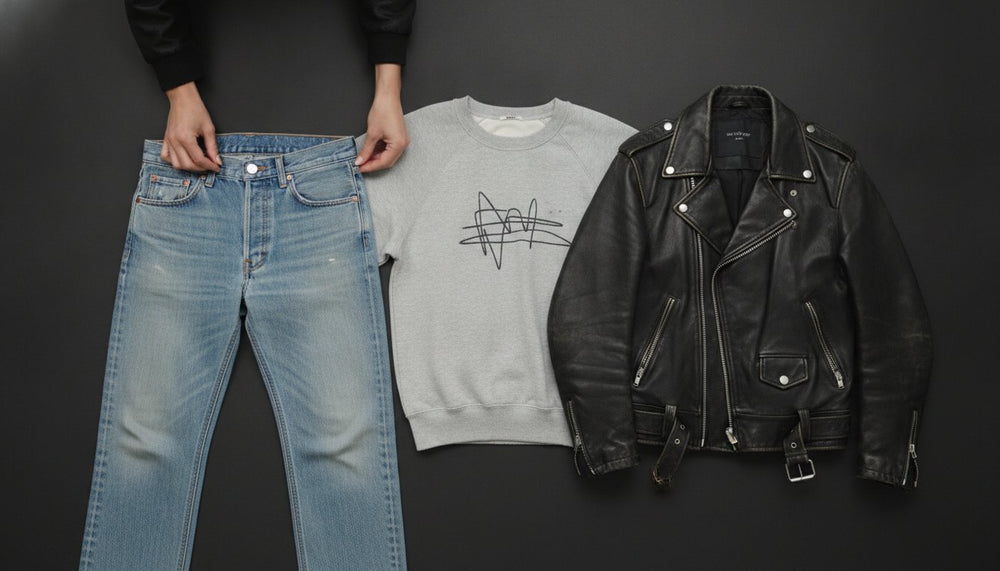
Your favorite high-street top is designed to fall apart before its first birthday. It's a cycle of planned obsolescence that leaves your closet full of disposable rags and the planet under a mountain of textile waste. We know the struggle is real. You're tired of clothes that lose their shape after three washes, and you're likely done with the overwhelming hunt through dusty thrift warehouses just to find one pair of jeans that actually fits. Building a sustainable vintage wardrobe shouldn't feel like an impossible chore; it should be a deliberate rebellion against the industry giants that value volume over soul.
We're here to help you dismantle those fast fashion habits by focusing on curation over consumption. This 2026 guide will teach you how to source high-quality, eco-friendly essentials, from authentic Y2k jeans to hand-picked vintage sweatshirts that actually hold their value. We'll show you how to move past the chaos of the bins and into a curated style that's as unique as you are, all while keeping your environmental impact low. It's time to stop chasing trends and start investing in pieces that tell a story.
Key Takeaways
- Understand why choosing a circular alternative is the ultimate rebellion against the environmental fallout of 2026's disposable fashion cycles.
- Master the technical checklist for inspecting seams, hems, and hardware to ensure every piece you buy is built to endure.
- Shift your strategy from the chaos of the bins to a curated approach that helps you build a functional, high-quality sustainable vintage wardrobe.
- Identify the four essential "power pieces," including high-value Y2k denim, that serve as the foundation for a unique and lasting personal style.
- Learn the professional maintenance secrets, like the "cold wash always" rule, to preserve your vintage sweatshirts and tops for decades to come.
why your wardrobe needs a vintage rebellion in 2026
The fashion industry is facing a massive reckoning. In 2026, we are no longer just shoppers; we are participants in a global crisis of overconsumption. With roughly 92 million tons of textile waste produced annually, the sheer volume of "disposable" clothing has reached a breaking point. Choosing to build a sustainable vintage wardrobe isn't just about looking good in a pair of Y2k jeans. It is a deliberate, circular alternative to the linear "take-make-waste" model of the high street. By opting for pre-existing garments, you are effectively boycotting the production of new, resource-heavy textiles and keeping high-quality materials in circulation for longer.
This shift represents a new era of garment longevity as activism. When you choose pieces that have already survived twenty years, you are making a statement against the industry's reliance on cheap labor and synthetic fibers. Embracing sustainable fashion principles means understanding that the most eco-friendly garment is the one that already exists. It's about moving away from the constant noise of seasonal drops and toward a strategy of mindful curation. This is where sustainable second hand fashion becomes the only logical future for those who value both style and the planet.
the fast fashion trap
Modern high-street clothes are built to fail. It is a calculated strategy known as built-in obsolescence, where garments are intentionally constructed with weak seams and low-grade fabrics so they lose their shape or pill after just a few wears. This cycle forces you back into the store, searching for a replacement that will inevitably suffer the same fate. We call this "fast fashion fatigue." It is the mental and financial exhaustion of spending money on clothes that don't last, and it is the primary driver for the current vintage movement. In a world of 92 million tons of waste, choosing durability is an act of rebellion.
vintage as a high-quality alternative
Older garments were simply built differently. Decades ago, clothes were constructed to be repaired, altered, and passed down, rather than thrown away at the first sign of a loose thread. When you source vintage tops or sweatshirts, you are often buying superior fabric weights and reinforced stitching that you won't find in modern mass production. There is also a profound psychological benefit to this approach. Owning a unique, one-of-a-kind piece means you aren't wearing a uniform dictated by an algorithm. In the 2026 fashion landscape, "second-hand" no longer means "second-best." It means you have the eye to spot quality where others only see the old.
decoding quality: how to spot a sustainable vintage garment
Train your eye. It's the only way to beat the system. When you're building a sustainable vintage wardrobe, you aren't just looking for a vibe; you're looking for structural integrity. Fast fashion has spent decades lowering our expectations of what a garment should be. We've been conditioned to accept crooked seams and plastic zippers as the norm. Breaking that cycle requires a return to technical literacy. By understanding how a garment is actually put together, you align yourself with the goals of the UN Alliance for Sustainable Fashion, which seeks to halt the environmental damage caused by disposable, low-quality production.
Every piece you consider should pass a rigorous physical inspection. Look at the hardware first. High-quality vintage garments from the 90s and early 2000s often feature heavy-duty YKK or Talon zippers and metal buttons rather than the flimsy plastic alternatives found today. If you're shopping online, prioritize sellers who offer a "refreshed and cleaned" status. This ensures the garment has been vetted for structural flaws before it reaches your door. For those ready to start their collection, browsing hand-picked vintage sweatshirts is a great way to see what high-density, durable fabric actually feels like.
the fabric hierarchy
Fabric composition is the single most important indicator of sustainability. Natural fibers like 100% cotton, wool, and silk are the gold standard because they are breathable, durable, and eventually biodegradable. Contrast this with modern "stretch" denim, which uses elastane that eventually snaps and causes the jeans to lose their shape. Vintage jeans made from 100% cotton denim will mold to your body over time and can be repaired indefinitely. If you're unsure about a fabric's origin, try a small "burn test" on an inconspicuous inner seam. Real silk or wool will smell like burnt hair and turn to ash, while synthetic polyester will melt and smell like acrid plastic.
construction and craftsmanship
Turn the garment inside out. This is where the truth lives. Look for French seams, where the raw edges are tucked away and sewn for extra strength, or reinforced stitching at high-stress points like armpits and pockets. Mass-produced modern items often use a simple overlock stitch that can easily unravel if one thread catches. Vintage sweatshirts often outlast modern hoodies because they were frequently made with a higher thread count and a loopback construction that maintains its thickness after hundreds of washes. When you find a garment with straight, tight stitching and heavy hardware, you've found a piece that was made with care, not just for a profit margin.
- Check for "Made in" labels that suggest smaller-scale production.
- Ensure hems are deep enough to be let down or repaired.
- Test all zippers and buttons for smooth, sturdy operation.
curated vs. random: the strategy for building a cohesive look
Thrifting shouldn't be a test of endurance. For too long, the narrative around second-hand shopping has focused on "the hunt," a chaotic process of digging through overstuffed racks in the hopes of finding a single wearable item. While the "bin hunt" has its place for some, building a sustainable vintage wardrobe requires a more surgical approach. Curation is the bridge between a closet full of random "cool finds" that don't match and a functional, expressive style that works every single day. It's the difference between buying because something is cheap and buying because it fits a specific strategic need in your life.
When you shift your focus to curated pieces, you're investing in a vision. This strategy relies on finding anchors, those high-quality garments that set the tone for your entire aesthetic. For many, vintage tops online serve as these essential anchors, providing a focal point that can be styled up or down. By choosing items that are already hand-picked for their structural integrity and cleaned to professional standards, you bypass the decision fatigue that often leads back to the convenience of fast fashion. You aren't just buying clothes; you're joining a movement that values quality control and manual care over mass-market randomness.
overcoming thrift store fatigue
Many people quit their sustainability journey because of thrift store fatigue. The sensory overwhelm of the mess, the specific "old clothes" smell, and the absolute chaos of inconsistent sizing can make the high street feel like the only easy option. This is why the rise of the curated vintage store is so vital in 2026. At thrifted apart, we solve the "quality gap" by doing the heavy lifting for you. We filter out the junk, handle the cleaning, and verify every seam, turning second-hand shopping into a high-end retail experience. This allows you to focus on style rather than survival while following a reputable guide to buying used and second-hand clothes.
the "capsule" approach to vintage
A cohesive look is built on a foundation of "slow buying." Instead of weekly hauls that clutter your space, aim for one high-quality piece per month that complements what you already own. Start by selecting a tight color palette, perhaps earth tones or faded neons, that allows you to mix Y2k jeans with 80s sweatshirts without creating a clashing silhouette. This capsule approach ensures that every vintage sweatshirt or pair of jeans you add has a job to do. It’s about creating a personal uniform that is both rebellious in its origin and sophisticated in its execution.
- Choose a base color palette of 3-4 tones.
- Prioritize "ready-to-wear" items to save time on cleaning and repairs.
- Focus on silhouettes that balance each other, like oversized tops with structured denim.

the essential components of a sustainable Y2k-inspired wardrobe
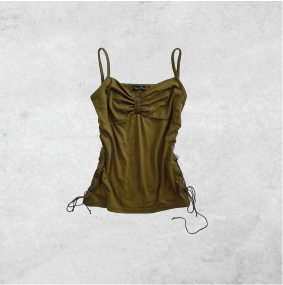
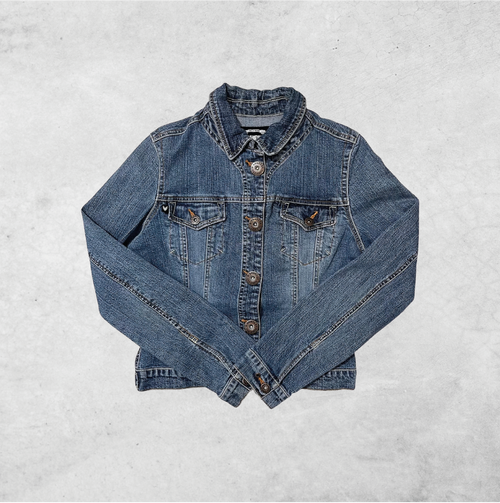
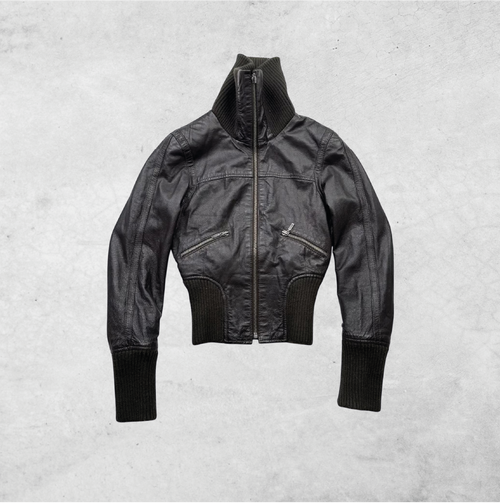
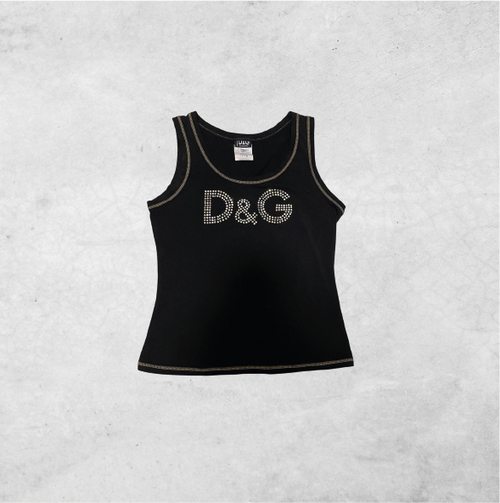
Building a sustainable vintage wardrobe is about more than just avoiding the high street. It is about identifying the specific "power pieces" that serve as the functional backbone of your personal style. In 2026, the Y2k resurgence has evolved from a nostalgic trend into a permanent fixture of conscious curation. This era was defined by bold silhouettes and durable construction, making these garments the perfect candidates for a long-term style investment. By focusing on four essential components, including heavy-duty denim, oversized sweatshirts, versatile skirts, and graphic tops, you create a rotation that is both expressive and environmentally responsible.
Each of these pieces carries a distinct history that modern mass production simply cannot replicate. When you source these items through a curated lens, you're ensuring that every addition to your closet is high-quality and built to endure. If you are ready to start your rebellion against the disposable fashion cycle, you can shop our curated Y2k jeans and discover the difference that authentic construction makes.
the denim foundation
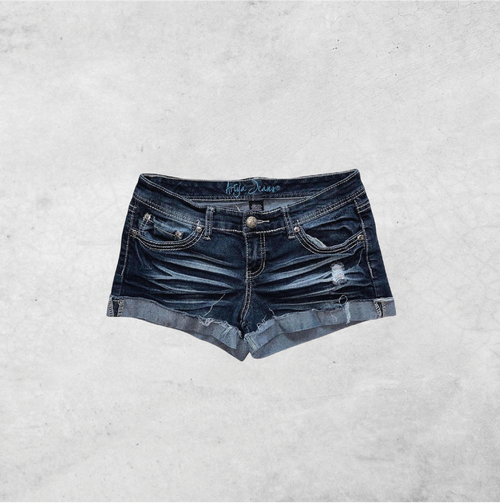
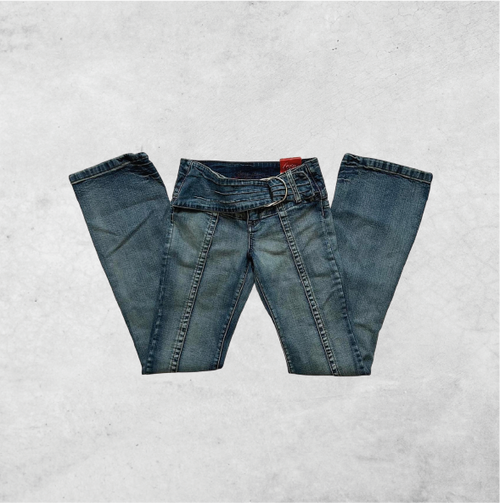
The foundation of any Y2k-inspired look is authentic denim. We're talking about the low-rise, baggy, and cargo styles that defined the turn of the millennium. Unlike the paper-thin, high-stretch denim found in modern mall stores, authentic Y2k jeans were often made with a higher weight and a more rigid structure. This allows them to hold their shape over decades of wear. When you're shopping for vintage jeans online, always look for detailed measurements rather than just a size tag. Since sizing has fluctuated wildly over the last twenty years, knowing the exact waist and rise measurements is the only way to guarantee a fit that feels like it was made for you.
layering with purpose
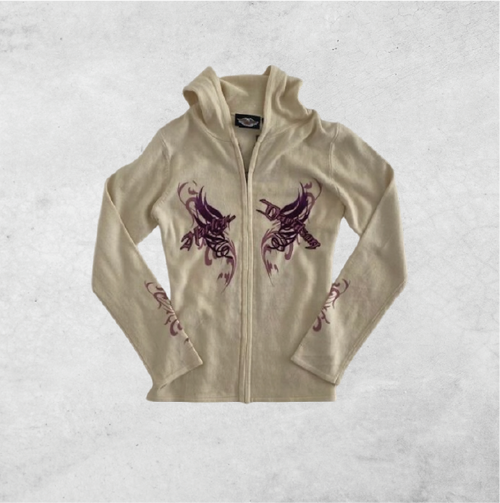
Oversized vintage sweatshirts are the ultimate "comfort-first" investment for a modern wardrobe. These aren't your typical thin hoodies. Vintage sweatshirts from the 90s and early 2000s often feature a dense loopback cotton that provides actual warmth and a superior drape. The appeal lies in the texture and history. Whether it's a collegiate print or a bold graphic, these pieces add a layer of authenticity to your outfit that a new, factory-distressed hoodie never could. Beyond the sweatshirt, integrating vintage skirts into your rotation allows for year-round versatility. Styling a cropped baby tee with a low-slung y2k skirt is the definitive summer look for the modern vintage rebel, but that same skirt can easily transition into winter when paired with heavy boots and a thick knit.
- Prioritize 100% cotton denim for a fit that molds to your body.
- Look for "heavyweight" descriptors when sourcing vintage sweatshirts.
- Use Y2k skirts to experiment with different lengths and silhouettes.
joining the movement: how to source and care for your pieces
Acquiring the clothes is only half the battle. To truly maintain a sustainable vintage wardrobe, you must become a steward of the fibers you've rescued. In a world that treats clothing as single-use plastic, the act of caring for a twenty-year-old sweatshirt is a radical rejection of throwaway culture. It is the final stage of your style rebellion. By extending the life of your garments, you ensure they remain out of landfills and in your rotation for another two decades. Quality construction always outlasts the latest trend cycle, but it requires your partnership to survive.
The golden rule is simple: wash less, cold wash always. Most modern laundry habits are unnecessarily aggressive, breaking down natural fibers and fading the character of vintage denim. Heat is the enemy of longevity. By sticking to cold cycles and minimal detergent, you preserve the structural integrity of your pieces. For denim and heavy knits, storage is equally critical. Never hang your vintage sweatshirts, as gravity will eventually distort the shoulders and necklines. Fold them instead. For your Y2k jeans, a cool, dry shelf is far better than a cramped drawer where the fabric can't breathe.
the art of garment maintenance
Master the small things. Spot cleaning is your first line of defense, allowing you to treat a single mark without subjecting the entire vintage top to the stress of a full immersion wash. When a deep clean is unavoidable, always opt for air-drying. The high heat of a tumble dryer is a primary cause of fiber breakage and shrinkage, particularly in older cottons and wools. You should also embrace "rebellion repairs." Learning to sew a button or fix a minor snag isn't just a practical skill; it's a way to keep your unique pieces in the fight. These small acts of manual care are what separate a conscious curator from a passive consumer.
sourcing with a conscience
Where you buy matters as much as what you buy. Choosing hand-picked and professionally cleaned items drastically reduces your personal carbon footprint by eliminating the need for new production and the energy-intensive "bin hunt" at scale. At thrifted apart, our curation process is built on transparency and strategy. We vet every seam and hardware component before a garment ever reaches our shop, ensuring you receive a piece that is ready to wear and built to last. It's time to step away from the chaos of the high street and invest in a closet that reflects your values. You can browse our hand-picked vintage selection and start your journey toward a more intentional, high-quality style today.
start your style rebellion today
Choosing to build a sustainable vintage wardrobe is a powerful statement against a broken industry. You've learned how to decode garment quality by looking at technical construction, how to swap the "bin hunt" for a curated strategy, and how to preserve your pieces for decades. Every pair of authentic Y2k jeans or heavy vintage sweatshirt you choose is a vote for durability over disposable trends. It's about more than just fashion; it's about taking responsibility for the footprint your closet leaves behind.
We make it easy to join this movement without the traditional thrift store fatigue. Every piece in our collection is hand-picked for quality and cleaned before it ever reaches you. With worldwide shipping for the global rebellion, we provide the authentic Y2k and vintage essentials you need to look good without the environmental cost. Stop settling for fast fashion and start investing in pieces that actually matter.
reclaim your style with our curated vintage collection
Your closet is ready for a change. Let's make it a lasting one together.
frequently asked questions
What makes a vintage wardrobe more sustainable than a "sustainable" new brand?
Vintage is more sustainable because it requires zero new resources and prevents existing waste from entering landfills. Even the most eco-friendly new brands still require water, energy, and raw materials to manufacture a garment from scratch. By choosing to build a sustainable vintage wardrobe, you're opting out of the production cycle entirely and keeping high-quality materials in active circulation for longer.
How can I tell if a Y2k item is high quality or just old fast fashion?
Check the weight of the fabric and the complexity of the internal stitching. Authentic Y2k pieces often feature heavier denim and reinforced metal hardware, while early fast fashion items from the same era feel flimsy or have uneven, single-stitched seams. Look for brands that were known for durability during that period rather than the ones that pioneered the disposable high-street model.
Is it better to buy 100% cotton or blended fabrics for longevity?
100% cotton is the superior choice for longevity and circularity. Natural fibers like cotton or wool can be repaired indefinitely and don't suffer from the "elastic snap" that ruins synthetic blends over time. While blends might offer initial stretch, they lose their shape much faster. Pure cotton denim actually molds to your body and gets better as it ages.
How do I clean vintage clothes without damaging the old fibres?
Use cold water cycles and avoid the tumble dryer at all costs. High heat is the primary cause of fiber degradation in older clothes. For delicate vintage tops, spot cleaning with a mild, eco-friendly detergent is often safer than full immersion. Air-drying on a flat surface prevents stretching and keeps the original silhouette of your sustainable vintage wardrobe intact for years.
Why is curated vintage more expensive than shopping at a local charity shop?
You're paying for the expert labor of selection, cleaning, and quality verification. Charity shops require you to spend hours filtering through junk and handling repairs yourself. Curated stores do the heavy lifting by ensuring every item is structurally sound and ready to wear immediately. It is a time-saving investment in guaranteed quality rather than a gamble on the bins.
What are the must-have Y2k pieces for a sustainable wardrobe in 2026?
Focus on low-rise baggy jeans, graphic baby tees, and oversized vintage sweatshirts. These pieces are the essential building blocks because they offer versatile silhouettes that are easy to layer throughout the year. In 2026, the movement is toward "power pieces" that can be styled in multiple ways, which effectively reduces the need for a bloated or cluttered closet.
How do I know my size in vintage clothing when shopping online?
Always rely on flat-lay measurements rather than the size printed on the tag. Vintage sizing is notoriously inconsistent because manufacturing standards have fluctuated wildly over the decades. Compare the waist, rise, and pit-to-pit measurements of a garment you already own to the measurements provided in the product description. This is the only foolproof way to ensure a perfect fit.